Private Approach By-law Review

Share Private Approach By-law Review on Facebook Share Private Approach By-law Review on Twitter Share Private Approach By-law Review on Linkedin Email Private Approach By-law Review link

Update: February 17, 2026

The New Private Approach By-law report is now live!

Staff will present the report and recommendations to the Public Works and Infrastructure Committee (PWIC) on Thursday, February 26, 2026 at 9:30 a.m.

The report is now available to the public: New Private Approach By-law

Recommendations summary

Right of Way, Heritage and Urban Design Services (ROWHUD) staff are recommending the passage of a new Access By-law that would replace the existing Private Approach By-law (No. 2003-447). The proposed Access By-law provides new opportunities for walkways and the limited expansion of driveways within the City’s right of way - in some instances without the need for a permit. These proposed permissions are set against the backdrop of continuing to preserve and protect the important functions of the right of way including preserving space for snow storage, on street parking and permeable boulevard surface to help absorb water. These recommendations come as a result of extensive internal consultations, a comprehensive municipal scan and public and industry engagement.

At a high-level, the proposed new Access By-law will:

  • align with the new Zoning By-law (No. 2026-50), which regulates walkways, driveways and parking on private property to ensure consistent rules;
    • provide more opportunities to have walkway and driveway configurations allowed in the new Zoning By-law continue to the sidewalk or roadway; and
    • recognize access to those front yard parking spaces installed prior to September 30, 2007, that have been legalized through the new Zoning By-law.
  • contribute to actions identified through the Council-approved Housing Acceleration Plan by addressing pedestrian access to private property.
  • increase flexibility to respond to individual contexts or unique design requirements when reviewing permit applications.
  • reduce the need for a standalone permit by integrating the review with other application processes where applicable.
  • ensure clear understanding and expectations of owner responsibility for maintenance and upkeep of accesses serving their property.

Background

The City of Ottawa is conducting a review and update of the Private Approach By-law (2003-447), which regulates the construction, use and maintenance of private approaches in the city. A private approach is the part of a vehicle access to private property that is on the City’s right of way (i.e. the portion of a driveway that is on City property). Existing rules for driveways and permits can be found on ottawa.ca/driveways.

Graphic showing the parts of the City right of way, being the boulevard, sidewalk, street and private approach, in relation to the lot lines around a residential dwelling unit.

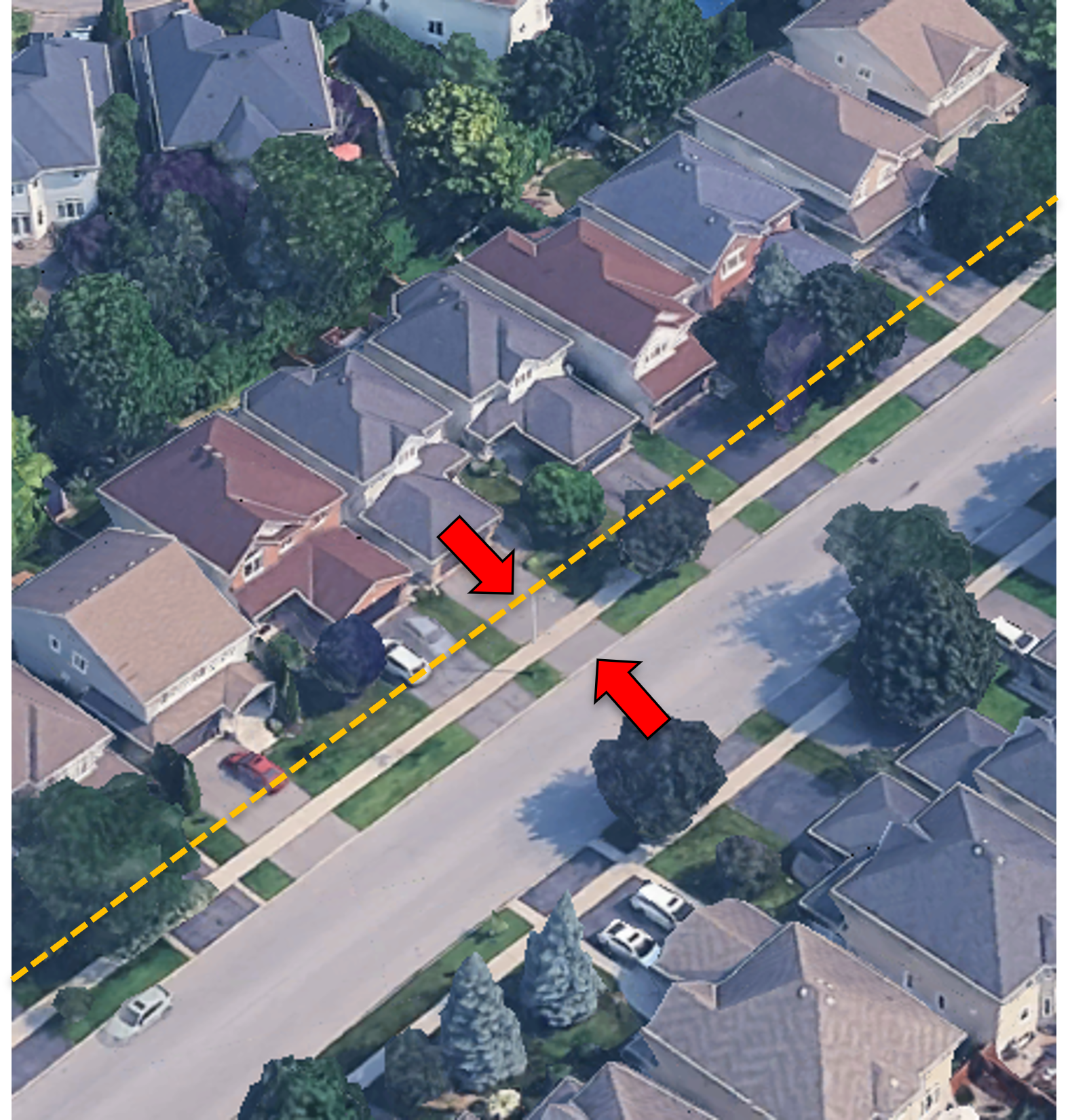
Aerial view of lot lines and private approaches, which are in the right of way.
Why is the City reviewing this by-law?

The Private Approach By-law has not been fully updated since it was created in 2003. Provincial planning rules have recently changed to support more multi-unit housing and the upcoming zoning changes, if approved, will impact the parking and access options in many areas of the city.

To be consistent, the City is reviewing the Private Approach By-law to identify gaps, align it with the new zoning regulations, and confirm the appropriate permit steps and fees. Walkways in the right of way have also created confusion, so they are being included as part of the review.

Objectives of the review

The updated by-law will set the rules for how driveways cross City land, covering design details, permits and maintenance, while also creating clear direction for walkways. These rules will be consistent with the new Zoning By-law. The City is checking its internal processes to ensure permitting is handled smoothly.

Both property owners and contractors are required to follow the by-law, though some may be unaware of the rules or the potential penalties for non-compliance. This review along with public outreach, is meant to explain the regulations more clearly so everyone understands when and how they can build or change a driveway or walkway.

Features of the by-law

Infographic showing that the Zoning By-law, Private Approach By-law and Road Activity By-law affect how an access is regulated through the size and location, permit requirements and enforcement.

Rules under the Private Approach By-law depend on both the Zoning By-law (2008-250) and Road Activity By-law (2003-445). A private approach permit won’t be issued if the planned driveway does not conform to the zoning, for example, if it is wider than the garage (legal parking space) it serves. After permit approval, construction or alteration cannot start until the contractor doing the work has a road cut permit. The road cut permit ensures that traffic will be managed safely, the street will be reinstated properly, and the contractor carries the required insurance.

The Private Approach By-law currently addresses these topics:

  • Permitting requirements and exemptions
  • Design (minimum and maximum widths, grade, etc.) and location for:
    • residential;
    • non-residential;
    • farm and field; and
    • temporary access
  • Use and maintenance requirements
  • Enforcement tools including removal and reinstatement

Guiding policy and principles

The City’s long-term growth plan (Official Plan) directs how the city and neighbourhoods should change over time. Key goals are to prepare for heavier rain and future floods by letting more stormwater soak into the ground and to expand the tree canopy so that trees cover about 40% of the built-up area.

In downtown and nearby older neighbourhoods, the City gives priority to keeping stretches of curb available for on-street parking and leaving front yard space open for trees and landscaping. Because of this, new driveways, or changes to existing driveways, may need to be narrower, shared or avoided altogether.

When allowing a driveway, the City must also make sure that the public land along the street is kept for important functions, keep traffic flowing, and reduce safety concerns for people walking, cycling, driving and working in the right of way.

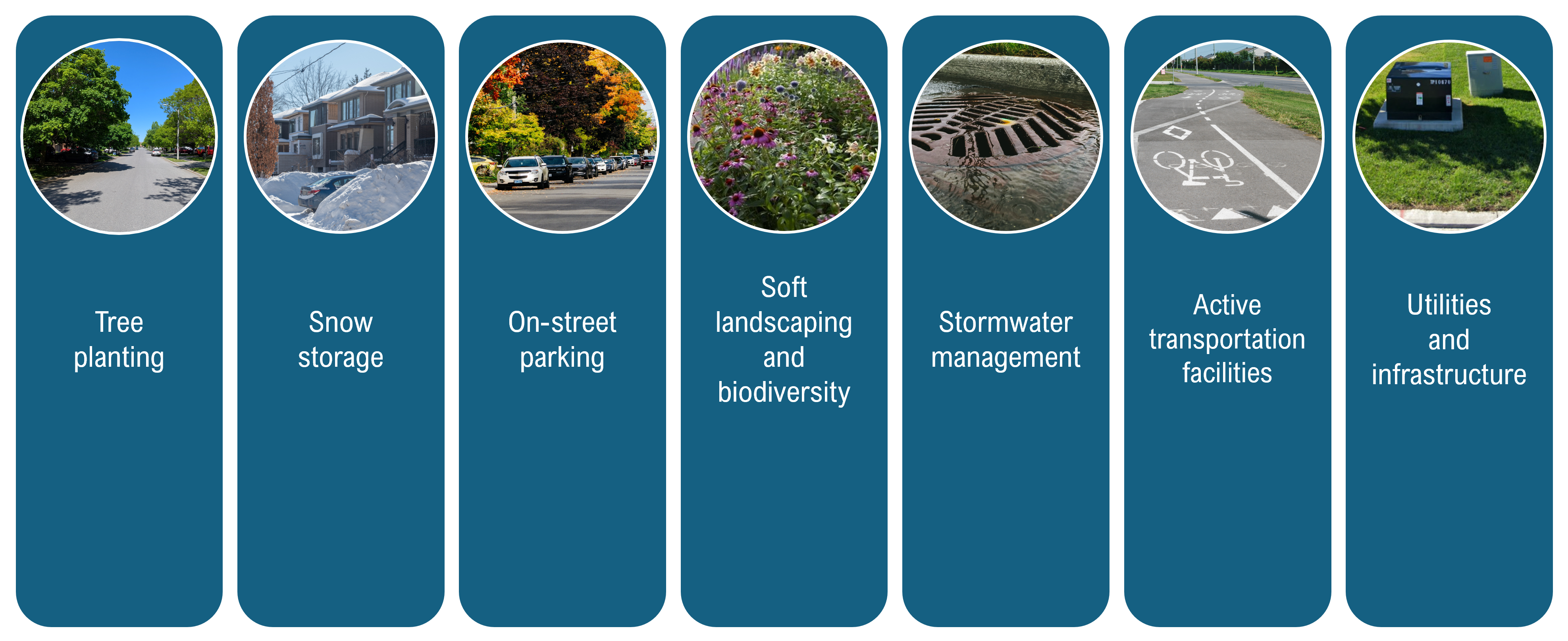
Infographic showing that the design, location and construction of accesses is impacted by considerations for tree planting, snow storage, on-street parking, soft landscaping and biodiversity, stormwater management, traffic flow and road safety, and utilities and infrastructure.

Why is it important to have rules for the design, location and construction of driveways?

  • Tree planting: Every driveway the City allows is less space for large shade trees to grow. The City needs to plant along the street to reach its target for expanding tree cover.
  • Snow storage: Over the winter, snow cleared from streets and sidewalks becomes snowbanks on the City boulevard. Residents must clear their own driveways, and this snow gets piled on their property until spring. If driveways are spaced too close together, or a front yard is mostly paved, there is not enough space to store snow over the winter.
  • On-street parking: Driveways reduce the amount of parking along the sides of City streets available for anyone to park. On-street parking is mostly used on a short-term basis for access to neighbouring properties or area businesses. In some areas, parking permits are available to residents who do not have access to off-street parking spaces to park on-street for up to 48 hours.
  • Soft landscaping and biodiversity: The City has updated the Use and Care of Roads By-law (2003-498) so that residents can replace grass in the boulevard between their property and the road with groundcover alternatives and plant gardens. This adds more variety of plants, benefits wildlife and helps cool neighbourhoods. When we choose pavement and hard materials over plants, the city gets hotter, and we decrease the natural ability to soak up water from heavy rainfalls and melting snow.
  • Stormwater management: Stormwater begins as rainfall and melting snow and ice. Stormwater on the ground is called runoff. In developed areas, hard surfaces like driveways cause stormwater to flow through storm sewers to local streams and rivers, often picking up contaminants along the way. Ditches are an important part of the drainage system in many rural communities and some older neighbourhoods. A culvert is a pipe that lets stormwater flow through a ditch under a driveway. If this pipe is designed, built or cared for the wrong way, water can’t soak into the ground properly and can flood or erode your property or your neighbour’s property. Stormwater management benefits all residents by keeping streets and basements dry, local waterways healthy and our drinking water sources clean.
  • Traffic flow and road safety: Entrances for businesses, industrial areas, farms and construction sites must be the right size and in the right place. If they are too narrow, too wide or poorly located, they can impact traffic around and inside the site and create safety hazards for pedestrians, drivers, and cyclists.
  • Utilities and infrastructure: Beneath the surface there are water, sewer, gas and communication lines. Aboveground, the boulevard is used for placing fire hydrants, street lighting, hydro poles and traffic signs. Anyone working in the right of way must be qualified, insured and follow safety rules.


Update: February 17, 2026

The New Private Approach By-law report is now live!

Staff will present the report and recommendations to the Public Works and Infrastructure Committee (PWIC) on Thursday, February 26, 2026 at 9:30 a.m.

The report is now available to the public: New Private Approach By-law

Recommendations summary

Right of Way, Heritage and Urban Design Services (ROWHUD) staff are recommending the passage of a new Access By-law that would replace the existing Private Approach By-law (No. 2003-447). The proposed Access By-law provides new opportunities for walkways and the limited expansion of driveways within the City’s right of way - in some instances without the need for a permit. These proposed permissions are set against the backdrop of continuing to preserve and protect the important functions of the right of way including preserving space for snow storage, on street parking and permeable boulevard surface to help absorb water. These recommendations come as a result of extensive internal consultations, a comprehensive municipal scan and public and industry engagement.

At a high-level, the proposed new Access By-law will:

  • align with the new Zoning By-law (No. 2026-50), which regulates walkways, driveways and parking on private property to ensure consistent rules;
    • provide more opportunities to have walkway and driveway configurations allowed in the new Zoning By-law continue to the sidewalk or roadway; and
    • recognize access to those front yard parking spaces installed prior to September 30, 2007, that have been legalized through the new Zoning By-law.
  • contribute to actions identified through the Council-approved Housing Acceleration Plan by addressing pedestrian access to private property.
  • increase flexibility to respond to individual contexts or unique design requirements when reviewing permit applications.
  • reduce the need for a standalone permit by integrating the review with other application processes where applicable.
  • ensure clear understanding and expectations of owner responsibility for maintenance and upkeep of accesses serving their property.

Background

The City of Ottawa is conducting a review and update of the Private Approach By-law (2003-447), which regulates the construction, use and maintenance of private approaches in the city. A private approach is the part of a vehicle access to private property that is on the City’s right of way (i.e. the portion of a driveway that is on City property). Existing rules for driveways and permits can be found on ottawa.ca/driveways.

Graphic showing the parts of the City right of way, being the boulevard, sidewalk, street and private approach, in relation to the lot lines around a residential dwelling unit.

Aerial view of lot lines and private approaches, which are in the right of way.
Why is the City reviewing this by-law?

The Private Approach By-law has not been fully updated since it was created in 2003. Provincial planning rules have recently changed to support more multi-unit housing and the upcoming zoning changes, if approved, will impact the parking and access options in many areas of the city.

To be consistent, the City is reviewing the Private Approach By-law to identify gaps, align it with the new zoning regulations, and confirm the appropriate permit steps and fees. Walkways in the right of way have also created confusion, so they are being included as part of the review.

Objectives of the review

The updated by-law will set the rules for how driveways cross City land, covering design details, permits and maintenance, while also creating clear direction for walkways. These rules will be consistent with the new Zoning By-law. The City is checking its internal processes to ensure permitting is handled smoothly.

Both property owners and contractors are required to follow the by-law, though some may be unaware of the rules or the potential penalties for non-compliance. This review along with public outreach, is meant to explain the regulations more clearly so everyone understands when and how they can build or change a driveway or walkway.

Features of the by-law

Infographic showing that the Zoning By-law, Private Approach By-law and Road Activity By-law affect how an access is regulated through the size and location, permit requirements and enforcement.

Rules under the Private Approach By-law depend on both the Zoning By-law (2008-250) and Road Activity By-law (2003-445). A private approach permit won’t be issued if the planned driveway does not conform to the zoning, for example, if it is wider than the garage (legal parking space) it serves. After permit approval, construction or alteration cannot start until the contractor doing the work has a road cut permit. The road cut permit ensures that traffic will be managed safely, the street will be reinstated properly, and the contractor carries the required insurance.

The Private Approach By-law currently addresses these topics:

  • Permitting requirements and exemptions
  • Design (minimum and maximum widths, grade, etc.) and location for:
    • residential;
    • non-residential;
    • farm and field; and
    • temporary access
  • Use and maintenance requirements
  • Enforcement tools including removal and reinstatement

Guiding policy and principles

The City’s long-term growth plan (Official Plan) directs how the city and neighbourhoods should change over time. Key goals are to prepare for heavier rain and future floods by letting more stormwater soak into the ground and to expand the tree canopy so that trees cover about 40% of the built-up area.

In downtown and nearby older neighbourhoods, the City gives priority to keeping stretches of curb available for on-street parking and leaving front yard space open for trees and landscaping. Because of this, new driveways, or changes to existing driveways, may need to be narrower, shared or avoided altogether.

When allowing a driveway, the City must also make sure that the public land along the street is kept for important functions, keep traffic flowing, and reduce safety concerns for people walking, cycling, driving and working in the right of way.

Infographic showing that the design, location and construction of accesses is impacted by considerations for tree planting, snow storage, on-street parking, soft landscaping and biodiversity, stormwater management, traffic flow and road safety, and utilities and infrastructure.

Why is it important to have rules for the design, location and construction of driveways?

  • Tree planting: Every driveway the City allows is less space for large shade trees to grow. The City needs to plant along the street to reach its target for expanding tree cover.
  • Snow storage: Over the winter, snow cleared from streets and sidewalks becomes snowbanks on the City boulevard. Residents must clear their own driveways, and this snow gets piled on their property until spring. If driveways are spaced too close together, or a front yard is mostly paved, there is not enough space to store snow over the winter.
  • On-street parking: Driveways reduce the amount of parking along the sides of City streets available for anyone to park. On-street parking is mostly used on a short-term basis for access to neighbouring properties or area businesses. In some areas, parking permits are available to residents who do not have access to off-street parking spaces to park on-street for up to 48 hours.
  • Soft landscaping and biodiversity: The City has updated the Use and Care of Roads By-law (2003-498) so that residents can replace grass in the boulevard between their property and the road with groundcover alternatives and plant gardens. This adds more variety of plants, benefits wildlife and helps cool neighbourhoods. When we choose pavement and hard materials over plants, the city gets hotter, and we decrease the natural ability to soak up water from heavy rainfalls and melting snow.
  • Stormwater management: Stormwater begins as rainfall and melting snow and ice. Stormwater on the ground is called runoff. In developed areas, hard surfaces like driveways cause stormwater to flow through storm sewers to local streams and rivers, often picking up contaminants along the way. Ditches are an important part of the drainage system in many rural communities and some older neighbourhoods. A culvert is a pipe that lets stormwater flow through a ditch under a driveway. If this pipe is designed, built or cared for the wrong way, water can’t soak into the ground properly and can flood or erode your property or your neighbour’s property. Stormwater management benefits all residents by keeping streets and basements dry, local waterways healthy and our drinking water sources clean.
  • Traffic flow and road safety: Entrances for businesses, industrial areas, farms and construction sites must be the right size and in the right place. If they are too narrow, too wide or poorly located, they can impact traffic around and inside the site and create safety hazards for pedestrians, drivers, and cyclists.
  • Utilities and infrastructure: Beneath the surface there are water, sewer, gas and communication lines. Aboveground, the boulevard is used for placing fire hydrants, street lighting, hydro poles and traffic signs. Anyone working in the right of way must be qualified, insured and follow safety rules.


  • The New Private Approach By-law report is now live!

    Share The New Private Approach By-law report is now live! on Facebook Share The New Private Approach By-law report is now live! on Twitter Share The New Private Approach By-law report is now live! on Linkedin Email The New Private Approach By-law report is now live! link

    Staff will present the report and recommendations to the Public Works and Infrastructure Committee (PWIC) on Thursday, February 26, 2026 at 9:30 a.m.

    The report is now available to the public: New Private Approach By-law

    If you would like to join as a delegate to speak at committee, you must register in advance. You may also submit a written delegation to show support or disagreement with recommendations. The contact information to request to be a delegate is below. You can find more information on how to participate in Council and committee proceedings here: Get involved in local government | City of Ottawa

    PWIC Committee Coordinator

    Marcela Busnardo dos Santos
    (613) 580-2424, ext. 28642
    marcela.busnardodossantos@ottawa.ca

    Committee proceedings can be streamed live on the Ottawa City Council YouTube Channel on February 26.

  • What We Learned Report

    Share What We Learned Report on Facebook Share What We Learned Report on Twitter Share What We Learned Report on Linkedin Email What We Learned Report link

    The following document provides a summary of the questions and comments received through the Engage Ottawa page, direct emails to the project team and during the virtual information sessions:

    The results of this engagement will be used to further develop staff’s recommendations for updated by-law provisions. Recommendations will be included in the staff report to the Public Works and Infrastructure Committee and City Council for their consideration and approval in February and March 2026.

  • Presentation from the Rural Public Information Session - November 10, 2025

    Share Presentation from the Rural Public Information Session - November 10, 2025 on Facebook Share Presentation from the Rural Public Information Session - November 10, 2025 on Twitter Share Presentation from the Rural Public Information Session - November 10, 2025 on Linkedin Email Presentation from the Rural Public Information Session - November 10, 2025 link

    Thank you to those that participated in the rural-focused public information session on November 10, 2025. The presentation from the session can be found here - November 10, 2025, Information Session.

  • Presentation from the Public Information Session - November 4, 2025

    Share Presentation from the Public Information Session - November 4, 2025 on Facebook Share Presentation from the Public Information Session - November 4, 2025 on Twitter Share Presentation from the Public Information Session - November 4, 2025 on Linkedin Email Presentation from the Public Information Session - November 4, 2025 link

    Thank you to those that participated in the public information session on November 4, 2025. The presentation from the session can be found here - November 4, 2025, Information Session.

  • Public Information Session – Private Approach By-law Review

    Share Public Information Session – Private Approach By-law Review on Facebook Share Public Information Session – Private Approach By-law Review on Twitter Share Public Information Session – Private Approach By-law Review on Linkedin Email Public Information Session – Private Approach By-law Review link

    The City is conducting a review and update of the Private Approach By-law, which regulates the construction, use and maintenance of private approaches in the city. A private approach is the part of a driveway or vehicular access to private property that is on the City’s right of way.


    The City of Ottawa is hosting two online public information sessions. The sessions will cover how the City reviews, permits and enforces private approaches, the functions of the right of way that need to be preserved, and an overview of the proposed by-law updates. The rural session will dedicate more time detailing items of particular interest to rural communities.

    Citywide session


    Date: Tuesday, November 4

    Time: 6:00 to 7:30 PM

    Registration: Click here to register


    Rural-focused session


    Date: Monday, November 10

    Time: 6:00 to 7:30 PM

    Registration: Click here to register


    For more information, please contact the project lead: Jacqueline.quinn@ottawa.ca.

Page last updated: 18 Feb 2026, 10:00 AM