Ottawa's next Municipal Culture Plan

Share Ottawa's next Municipal Culture Plan on Facebook Share Ottawa's next Municipal Culture Plan on X (formerly Twitter) Share Ottawa's next Municipal Culture Plan on Linkedin Email Ottawa's next Municipal Culture Plan link

In 2025, the City of Ottawa is embarking on an exciting journey to develop a new Municipal Culture Plan. This is the first city-wide cultural planning exercise since 2012 and aims to help the City better serve the evolving needs of Ottawa’s culturally diverse populations.

Led by Recreation, Cultural and Facility Services, the new Culture Plan will be created collaboratively with residents and community groups. Together, we will:

Define Culture: Update the municipal definition of culture to reflect how residents understand, use, and live the word, informing City supports and programming.

Set out a vision for the next five years: Establish a strategic vision and goals to guide the City in supporting residents' access to, expression of, and participation in culture.

Create an action plan: Develop a concrete, realistic, and achievable action plan to make measurable progress towards these goals.

Map Cultural Resources: Compile a comprehensive public access inventory of Ottawa’s cultural resources, including spaces & places, artists, and groups.

The Plan will align with key corporate plans and strategies, including the Official Plan, the City of Ottawa – AnishinaabeAlgonquin Host Nation Civic Cultural Protocol, the Anti-Racism Strategy, Women and Gender Equity Strategy, Community Safety and Wellbeing Plan, and the Climate Change Master Plan, among others.

Research for the Culture Plan began in June 2024, and the development process will be launched publicly in April 2025. We aim to engage 10,000 residents through various activities, including a culture roadshow, online surveys, focus groups, interviews, and community-led engagement sessions.

This process will help us understand what culture means to our residents and identify critical needs, such as those around spaces and places.

Join us in shaping Ottawa's cultural future! Your voice matters. Together, we can create a vibrant, inclusive, and culturally rich city


  • New cultural places and spaces data coming to Open Ottawa

    Share New cultural places and spaces data coming to Open Ottawa on Facebook Share New cultural places and spaces data coming to Open Ottawa on X (formerly Twitter) Share New cultural places and spaces data coming to Open Ottawa on Linkedin Email New cultural places and spaces data coming to Open Ottawa link

    The City will publish the next round of cultural data on Open Ottawa, featuring more than 800 cultural places and spaces across Ottawa.

    Available in both English and French, the dataset brings together information about the physical places that make up Ottawa’s cultural landscape. Places are organized into broad categories such as venues, studios, heritage, community and learning spaces, with additional subcategories and tags providing more detail about each location.

    This release focuses on cultural places and spaces; data on cultural organizations and groups is already available through Open Ottawa.

    This is the first phase of an evolving cultural inventory, and the data will continue to be refined and expanded.


    Explore Open Ottawa: https://open.ottawa.ca/

  • New cultural places and spaces data coming to Open Ottawa 

    Share New cultural places and spaces data coming to Open Ottawa  on Facebook Share New cultural places and spaces data coming to Open Ottawa  on X (formerly Twitter) Share New cultural places and spaces data coming to Open Ottawa  on Linkedin Email New cultural places and spaces data coming to Open Ottawa  link

    As part of the cultural mapping work supporting the Next Municipal Culture Plan, the second of three cultural data sets has been published on Open Ottawa. It follows the Cultural Groups and Organizations Inventory published earlier this year and the upcoming Artist/Creator Inventory. Together, these datasets offer a detailed snapshot of the people, places, and practices shaping cultural life in Ottawa, serving as a valuable resource for cultural leaders, researchers, planners, and residents alike.

    Available in both English and French, this dataset features more than 800 cultural places and spaces and brings together information about the physical places that make up Ottawa’s cultural landscape. Places are organized into broad categories such as venues, studios, heritage, community and learning spaces, with additional subcategories and tags providing more detail about each location. 

    This is an evolving cultural spaces inventory, and the data will continue to be refined and expanded. 

    Explore Open Ottawa: https://open.ottawa.ca/

  • Anishinabe Algonquin Nation Engagement

    Share Anishinabe Algonquin Nation Engagement on Facebook Share Anishinabe Algonquin Nation Engagement on X (formerly Twitter) Share Anishinabe Algonquin Nation Engagement on Linkedin Email Anishinabe Algonquin Nation Engagement link

    As part of the development of Ottawa’s new Municipal Culture Plan, the City of Ottawa engaged with Anishinabe Algonquin Nation Elders, Knowledge Keepers, representatives, community members, and youth to learn about their cultural perspectives, priorities, and needs. As Ottawa’s Host Nation, the Anishinabe Algonquin Nation has a distinct and essential role in shaping the Plan.

    Engagement took place between November 2025 and May 2026 through 10 interviews, an Elder session with eight participants, and written responses from five youth. Participants represented Kitigan Zibi Anishinabeg First Nation, the Algonquins of Pikwakanagan First Nation, Wolf Lake First Nation, and Timiskaming First Nation.

    For more information on our Host Nation engagements, please contact Natalí Zúñiga at Natali.Zuniga@Ottawa.ca

  • Opportunities Through Community

    Share Opportunities Through Community on Facebook Share Opportunities Through Community on X (formerly Twitter) Share Opportunities Through Community on Linkedin Email Opportunities Through Community link
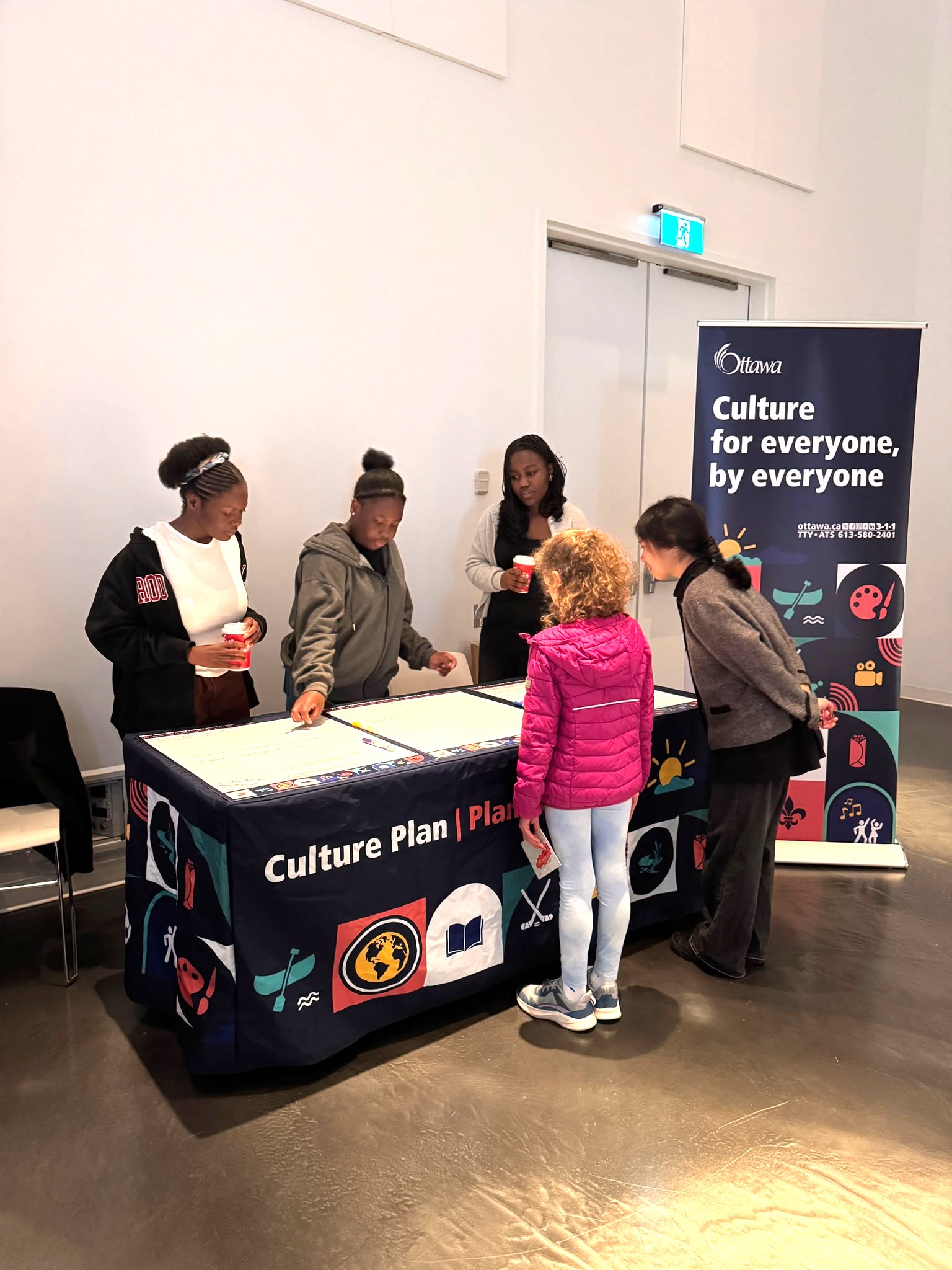
    supporting image

    Future Paths Network was one of several community partners that contributed to the development of Ottawa’s next Municipal Culture Plan. Through its work supporting Black youth and strengthening community connections, the organization brought valuable perspectives to the engagement process.

    The organization participated as part of the City-wide engagement process that took place across Ottawa’s urban, suburban, and rural communities helping the Culture Plan team reach over 12,000 residents.

    Future Paths Network helped share insights on youth engagement, inclusion, community leadership, belonging, and access to cultural opportunities. Their participation helped ensure that the experiences and aspirations of young people and underrepresented communities were reflected in conversations about Ottawa’s cultural future.

    By leveraging trusted community relationships and creating opportunities for residents to share their experiences in familiar environments, Future Paths Network helped broaden participation and strengthen the diversity of voices represented in the Culture Plan. Their contributions are helping shape a plan that supports cultural participation, celebrates diversity, and builds stronger community connections across Ottawa.

  • Youth Futures student supports the Culture Plan team

    Share Youth Futures student supports the Culture Plan team on Facebook Share Youth Futures student supports the Culture Plan team on X (formerly Twitter) Share Youth Futures student supports the Culture Plan team on Linkedin Email Youth Futures student supports the Culture Plan team link

    This summer, Mahad Hussein joined the Cultural Development and Initiatives team through the Youth Futures program, providing administrative and communications support for Ottawa’s Next Municipal Culture Plan.

    Youth Futures is a six-month bilingual program that supports Ottawa youth ages 16 to 21 from low-income and social housing communities. Through leadership development, mentorship, post-secondary orientation and paid work experience, the program helps young people build skills and prepare for future education and employment. It is delivered in partnership by the City of Ottawa, BGC Ottawa and the Ottawa Community Housing Foundation.

    During his placement, Mahad helped create newsletters, organize information, and support day-to-day activities connected to the Culture Plan. His work contributed to the team’s ongoing efforts to share information and keep the project moving forward.

    Mahad brought a positive attitude, strong work ethics, and willingness to learn everything he took on. He quickly became a valued member of the team.

    Thank you, Mahad, for your contributions this summer, and all the best in what comes next.

  • Getting Out into the Community: The Value of Pop-Up Roadshows

    Share Getting Out into the Community: The Value of Pop-Up Roadshows on Facebook Share Getting Out into the Community: The Value of Pop-Up Roadshows on X (formerly Twitter) Share Getting Out into the Community: The Value of Pop-Up Roadshows on Linkedin Email Getting Out into the Community: The Value of Pop-Up Roadshows link

    As work continues on Ottawa’s next Municipal Culture Plan, pop-up roadshows have played an important role in helping the project team connect directly with residents across the city. By bringing engagement opportunities into communities, the team has been able to hear from a wide range of people about their experiences, ideas, and aspirations for Ottawa’s cultural future.

    The roadshows reached communities in all 24 wards, connecting with residents in urban, suburban, and rural areas. From downtown public spaces and community events to neighbourhood hubs in Barrhaven and Orléans, and gathering places in communities such as Carp, Metcalfe, and Osgoode, each stop created opportunities for meaningful conversations about culture in Ottawa.

    These informal, face-to-face discussions helped make engagement more accessible and welcoming. Rather than asking residents to come to City-led consultations, the project team met people where they already gather, making it easier for more voices to be heard. Participants shared what culture means to them, what makes their communities unique, and what they would like to see supported in the future.

    The feedback gathered through these roadshows is helping shape the next phase of work on Ottawa’s Municipal Culture Plan. By connecting with residents in every part of the city, the project team is building a broader understanding of the needs, strengths, and opportunities that exist across Ottawa’s diverse communities.

  • Doors Open Ottawa 2025

    Share Doors Open Ottawa 2025 on Facebook Share Doors Open Ottawa 2025 on X (formerly Twitter) Share Doors Open Ottawa 2025 on Linkedin Email Doors Open Ottawa 2025 link

    Doors Open Ottawa 2025 was the most successful engagement activity for the Culture Plan, reaching 679 residents and actively engaging 627 people, by far the busiest!

    By bringing cultural planning conversations into an existing city-wide event, The Culture Plan team were able to meet people where they already were. Conversations and activities took place in both urban and rural locations, with venues including the Gladstone Theatre, Dominion Observatory, Cumberland Heritage Village Museum, and Arts Court helping connect residents and communities.

    Residents spoke about the importance of free, accessible opportunities for participation and the value of neighbourhood culture. Residents highlighted that

    Doors Open Ottawa 2025 was the most successful engagement activity for the Culture Plan, reaching 679 residents and actively engaging 627 people, by far the busiest!

    By bringing cultural planning conversations into an existing city-wide event, The Culture Plan team were able to meet people where they already were. Conversations and activities took place in both urban and rural locations, with venues including the Gladstone Theatre, Dominion Observatory, Cumberland Heritage Village Museum, and Arts Court helping connect residents and communities.

    Residents spoke about the importance of free, accessible opportunities for participation and the value of neighbourhood culture. Residents highlighted that local spaces, programs, and events shape everyday experiences and larger city-wide events create a shared sense of culture in Ottawa.

    Locations like the Gladstone Theatre and Cumberland demonstrated how familiar and welcoming cultural spaces can encourage meaningful connections.

    A sincere thank you to the host venues, the Doors Open Ottawa team, and everyone who took the time to share their perspectives.

    Overall, Doors Open Ottawa proved to be a highly effective, low-barrier engagement approach and a strong example of the value of bringing conversations directly into the spaces and events where residents are already gathering.

  • From pop-ups to policy: Capturing culture in real time

    Share From pop-ups to policy: Capturing culture in real time on Facebook Share From pop-ups to policy: Capturing culture in real time on X (formerly Twitter) Share From pop-ups to policy: Capturing culture in real time on Linkedin Email From pop-ups to policy: Capturing culture in real time link

    As part of roadshows (meeting communties in every ward) and community pop-ups, a simple, low-barrier approach was used to gather input on culture in Ottawa. Interactive boards invited residents to respond to key questions like:

    • What does culture mean to you?
    • How do you describe Ottawa’s culture?
    • Where do you experience culture in Ottawa?
    • What are your favourite cultural activities, programs or events?
    • Who are your favourite Ottawa artists, creators, cultural groups or organizations?
    • What idea(s) do you have to improve culture in Ottawa?

    Residents engaged with the boards in ways that felt most comfortable, writing responses, drawing, underlining ideas

    As part of roadshows (meeting communties in every ward) and community pop-ups, a simple, low-barrier approach was used to gather input on culture in Ottawa. Interactive boards invited residents to respond to key questions like:

    • What does culture mean to you?
    • How do you describe Ottawa’s culture?
    • Where do you experience culture in Ottawa?
    • What are your favourite cultural activities, programs or events?
    • Who are your favourite Ottawa artists, creators, cultural groups or organizations?
    • What idea(s) do you have to improve culture in Ottawa?

    Residents engaged with the boards in ways that felt most comfortable, writing responses, drawing, underlining ideas they agreed with, and building on what others had shared. This flexible format made it easy for people of all ages and backgrounds to contribute, encouraging spontaneous and authentic input.

    The boards became collaborative spaces, capturing a wide range of perspectives while also revealing shared themes across communities.

    To ensure each contribution could be captured and analyzed, optical character recognition (OCR) technology was used to digitize the boards. This process translates handwritten and visual input into data that can be quantified and better understood.

    The result is a richer understanding of how residents experience culture, helping to inform future planning and support a more inclusive cultural landscape in Ottawa.

  • The cultural planning process

    Share The cultural planning process on Facebook Share The cultural planning process on X (formerly Twitter) Share The cultural planning process on Linkedin Email The cultural planning process link

    Cities usually take a similar path when creating culture plans, starting with research, connecting with the community and cultural leaders, and turning ideas into action. Ottawa followed this same approach, with a strong focus on hearing directly from residents and those involved in Ottawa’s cultural scenes.

    The process began with research into what’s happening both locally and in other cities, looking at Ottawa’s current cultural landscape while also learning from trends and best practices elsewhere. This research will be shared in the final Culture Plan in a clear and accessible way, so residents can see what helped shape its direction.

    Community engagement is central to the process. Through Engage Ottawa, surveys, Cultural Liaisons, interviews, and outreach in every ward, residents, artists, and organizations shared their ideas and priorities. The Culture Plan team also worked closely with City staff and key partners to make sure the plan builds on existing work and brings different areas of expertise together.

    All of this input has helped shape key themes and priorities, which are now being turned into clear actions and strategies.

    Ottawa’s Next Culture Plan will be a roadmap for the future, grounded in community voices, elevated by sector experiences, and designed to support cultural growth across the city.

  • Ottawa’s Next Municipal Culture Plan Engagement: By the Numbers

    Share Ottawa’s Next Municipal Culture Plan Engagement: By the Numbers on Facebook Share Ottawa’s Next Municipal Culture Plan Engagement: By the Numbers on X (formerly Twitter) Share Ottawa’s Next Municipal Culture Plan Engagement: By the Numbers on Linkedin Email Ottawa’s Next Municipal Culture Plan Engagement: By the Numbers link

    It has been a busy year! Thank you to everyone who shared their time and voice with the Culture Plan team! Ottawa stepped up to shape its next Cultural Plan.

    • 17,302 informed and 6,168 actively engaged participants
    • 24/24 roadshow stops completed across the city
    • 84 external meetings and 43 internal consultations
    • 36 cultural liaison sessions
    • 23 community events and 21 partner events

    Engagement reached across sectors and communities:

    • 277 staff conversations
    • 84 external organizations
    • 118 non-city participants
    • 43 city teams

    From broad awareness to in-depth dialogue, the process created multiple opportunities for participation online, in community, and through targeted outreach.

    These numbers reflect the scale, reach, and depth of engagement and a strong, citywide commitment to shaping Ottawa’s cultural future.

Page last updated: 28 Oct 2026, 11:00 AM