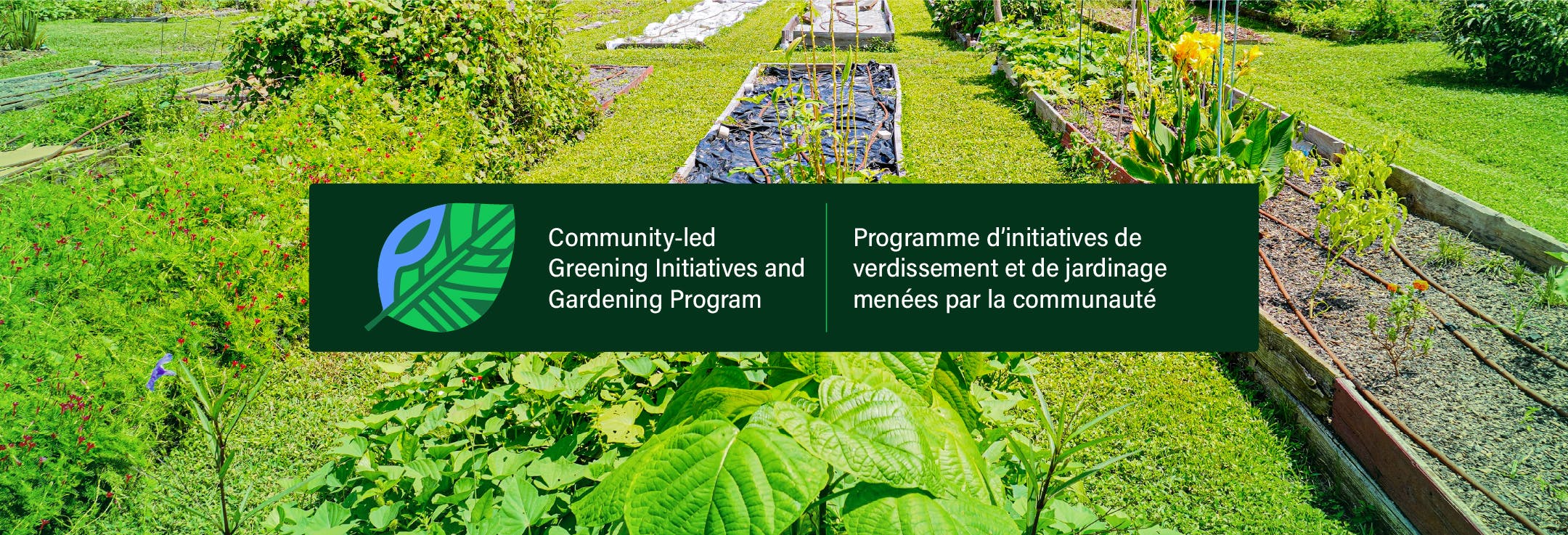
Community Gardens and Community-Led Greening Initiatives

Community-led Greening Initiatives and Gardening Program
Grow together. Green together. Build community.
The City of Ottawa supports residents in creating and maintaining community gardens and greening projects on City-owned land. These initiatives bring people together, improve neighbourhoods, and help care for the environment
Update January 2026 - Community-led Greening Initiatives and Gardening Program
Apply to Start or Expand a Community-led Greening Initiative or Gardening Project.
On April 30, 2025, Ottawa City Council approved a new Community-led Greening Initiatives and Gardening Program led by the Recreation, Cultural and Facility Services (RCFS) Department.
Purpose of the Community-led Greening Initiatives and Gardening Program
The Community-led Greening Initiatives and Gardening Program supports Ottawa residents who want to improve public spaces on City land through community-led gardening, ecological restoration, and other greening projects. The program provides equitable access to City land, technical guidance, and a consistent policy framework that supports both food-producing gardens and non-food greening initiatives.
The program serves as the City’s mechanism for granting community access to City land for approved greening and gardening initiatives. Through an in-principal approval process, the program authorizes eligible organizations to establish, build, and maintain gardens and greening projects in public spaces, with responsibility for all associated development, implementation, and ongoing maintenance costs, in accordance with City policies and technical requirements.
Before You Begin
To ensure applications are successful, applicants are encouraged to carefully review all information tabs on ottawa.ca/gardens and review all information details before starting their application.
Eligibility
Projects must be community-led and located on City land.
Initiatives can include food gardens, pollinator and native plant gardens, rain gardens, ornamental and xeriscape gardens, along with other greening initiatives such as select invasive species management when connected to a garden or greening project.
What You Will Need to Apply
Completed application form
Community group contact information
Site map or sketch
Any additional permits or approvals (if required)
Steps to Apply
Review the Information Package to ensure your organization and project meets all eligibility requirements.
Prepare supporting documents, including:
- Project proposal and site plan
- Proof of community support
- Maintenance plan
Submit your application online
Important Dates
Intake period for new or expanded projects on City land: July 31 to August 31. Late submissions will not be considered for this intake period.
How to Submit
Following the review of all information tabs and program related documents, groups are encouraged to:
Applications will be available between July 31 to August 31, 2026. If your group is not ready to apply during this intake period, there will be additional opportunities to submit an application later in 2026.
Update November 2025 - Community-led Greening Initiatives and Gardening Program
The City of Ottawa is pleased to share the latest update on the Community-led Greening Initiatives and Gardening Program. This city-wide initiative supports community-led gardens and community-led greening projects on City-owned land.
In response to Council’s direction, Recreation, Cultural and Facility Services (RCFS) has established a formal mandate for this program, aligning with the City’s environmental, equity, and climate goals. The program recognizes gardening and greening as essential contributors to civic engagement, community wellness, and sustainability.
Program Overview
This program creates a centralized, coordinated model to support diverse community-led projects on City-owned land, including food gardens, pollinator and ornamental gardens along with naturalization efforts.
Through this new approach, the City will:
- Offer a streamlined bi-annual intake process for incorporated and unincorporated groups.
- Provide equitable access to city-land, technical support, and clear policy guidance.
- Foster stronger neighbourhoods and greener spaces across Ottawa.
This initiative advances the City’s vision for inclusive, connected, and resilient communities by improving access to green spaces and supporting environmental stewardship at the community level.
Program Development and Implementation
The program builds upon the City’s long-standing commitment to community gardens, first established through the Community Garden Action Plan (CGAP) in partnership with Just Food. Following Council’s 2023 directive to review the Community Garden Action Plan and its 2025 direction to realign the portfolio, the Community-led Greening Initiatives and Gardening Program is now centrally managed by RCFS.
What You Can Expect to See in Your Community
The program brings together a range of community greening activities - from food gardens and pollinator plantings to naturalization, and other small-scale environmental projects.
Through the new Community-led Greening Initiatives and Gardening Program, residents and community groups will have opportunities to bring new gardens and green spaces to their neighbourhoods. Successful projects could include:
- Food-producing community gardens that increase access to fresh, locally grown produce — such as shared vegetable plots, herb planters, or edible landscapes.
- Pollinator gardens that support bees, butterflies, and other beneficial species with native wildflowers, flowering shrubs, and seasonal blooms.
- Ornamental gardens that enhance neighbourhood spaces with colourful plantings, decorative borders, or themed floral displays.
- Collaborative greening, naturalization, and small-scale environmental projects that restore and enhance local ecosystems - for example, creating wildlife-friendly spaces, improving soil health, or supporting community composting initiatives.
Greenspace Assessment and Technical Evaluation (GATE) Process
A key feature of the program is the new GATE Working Group, which oversees the application and review process for all community-led initiatives on City land. This includes:
- Engagement of key departmental subject matter experts to assess proposals
- Technical and operational feasibility evaluations
- Coordinated recommendations on whether applications can proceed
The initial 2025 intake focused on historical requests and process development in preparation for the full program launch in January 2026.
Status of Historical Requests
- 18 projects advanced to the next review stage
RCFS is also developing a comprehensive inventory of all existing gardens and greening initiatives on City land to improve reporting and coordination.
Program Rollout
The public launch of the full program is scheduled for Q1 2026, coinciding with the first intake period.
New supports will include:
- A detailed “How-To Guide” for applicants
- Public information sessions to promote awareness and equitable participation
- A central point of contact for inquiries and applications: communitygardens@ottawa.ca
Applicants from the first public intake will be notified of approval decisions by Spring 2026, with community feedback gathered by mid-2026 to inform program refinements.
Recent Enhancements
Several early initiatives have or are being implemented to strengthen access, coordination, and community outcomes:
- A City-operated program with centralized management and oversight
- Online Application to streamline submissions
- Formation of the GATE Working Group
- Updated standards for food-consumption and non-food greening initiatives
- Comprehensive site inventory underway
- New program name and identifier to reflect the City’s greening and sustainability goals
Looking Ahead
The City remains committed to continuous improvement and community collaboration. Future opportunities will explore:
- Alignment with broader City strategies such as climate action, food security, and sustainability
- Expanded outreach to marginalized and priority communities
- Enhanced community training, education, and partnerships
- Exploration of additional funding sources and sponsorship opportunities
These next steps will ensure the program continues to evolve in step with community needs and supports a sustainable, equitable, and green Ottawa for years to come.
Conclusion
The Community-led Greening Initiatives and Gardening Program represents a significant milestone in supporting community-driven sustainability and access to green spaces across the city. By streamlining processes, enhancing coordination, and prioritizing equity, the City of Ottawa is helping residents grow greener, more connected neighbourhoods - together.
Update April 2025 –"What We Learned" Report and Report to Council
Please find here the “What We Learned” report that summarizes key insights and feedback gathered through community engagement. Thank you to everyone who participated in this important process!
This feedback has helped shape the Report that will be brought to Community Services Committee on April 22, 2025, and to Council on April 30, 2025.
More information on Committees and Council meetings can be found on Ottawa.ca.
The City of Ottawa is reviewing and updating the community garden action plan to create clear processes and supports for community-led green initiative programs on City-owned land.
This update is happening collaboratively with City departments, community partners and with input from community members like you.
The review will focus on:
- Community food gardens on City-owned land
- Community-led green Initiatives on City-owned land (Including but not limited to pollinator gardens, naturalization efforts, and invasive species management, along with requests for their service, maintenance, and development)
Project Overview:
The review will be proceeding in distinct phases:
Phase 1: Developing a City Framework
The objective is to contribute to ensuring the development of an inclusive strategy and framework for community gardens and community-led green initiatives on City-owned land.
A report to Council is planned for Spring 2025 with review and proposed recommendations shaped by internal and external assessments and community engagement.
Phase 2: Operational Development - Spring 2025
In response to Council’s directives, Recreation, Cultural and Facility Services (RCFS) has established a formal, city-wide mandate for the Community-led Greening Initiatives and Gardening Program,
Program Implementation: RCFS has launched a unified city-wide Community-Led Greening Initiatives and Gardening Program to strengthen environmental stewardship, equity, and access to city-lands.
Streamlined Operations: A centralized GATE process and online application system standardize intake, review, and approvals for community projects on City-owned land, supported by updated program standards and renewed agreements.
Public Rollout and Next Steps: The full program launch is planned for Q1, 2026 with public resources, information sessions, and updated agreements underway - ensuring equitable participation and long-term sustainability.
Phase 3: Full program launch – Winter 2026
Following Council approval on April 30, 2025, the Community-led Greening Initiatives and Gardening Program advances to full implementation under the leadership of RCFS.
Program Activation:
The City formally opens the program to Ottawa residents and community organizations, enabling community-led gardening, ecological restoration, and greening initiatives on City-owned land through a consistent, city-wide framework.
Application Intake and Support:
An online intake period for new or expanded projects on City land will run from July 31 to August 31. 2026, supported by comprehensive application resources, including an Information Package, “How to Apply” Guide, Gardening Standards, and the application forms. Technical guidance is available through the process to support successful applications.
Implementation and Oversight:
Approved projects receive in-principal authorization to establish and maintain gardens and greening initiatives, with community organizations responsible for implementation and ongoing maintenance in alignment with City policies and technical standards.
Outcome:
Phase 3 establishes the program as the City’s mechanism for enabling community-led greening on City land, supporting food security, biodiversity, environmental stewardship, and inclusive access to public spaces across city-lands.

-
Recreation & Community Development Officer
City of Ottawa

-
 Community Greening Pathways Information Session.pdf (4.11 MB) (pdf)
-
City accepting applications for Ottawa’s community-led greening initiatives and gardening program
-
Information Session Community-Led Greening Initiatives Gardening Program.pdf (1.48 MB) (pdf)
-
Community-led Greening Initiatives Gardening Program Application Information Package
-
2026 Community-led Greening Initiatives Gardening Program “How to Apply”
-
Community-led Greening Initiatives Gardening Program Application Form
-
Supplemental Application (required only during Phase Two)
-
IPD Community-Led Greening Initiatives and Gardening Program - October 2025
-
Community-led Green Initiatives and Garden Program - April 30 2025
-
What We Learned Report – Community Garden Action Plan Review (1.17 MB) (pdf)
-
Community Gardens Framework Motion by_ Councillor M. Carr and C. Kitts (2023)
